
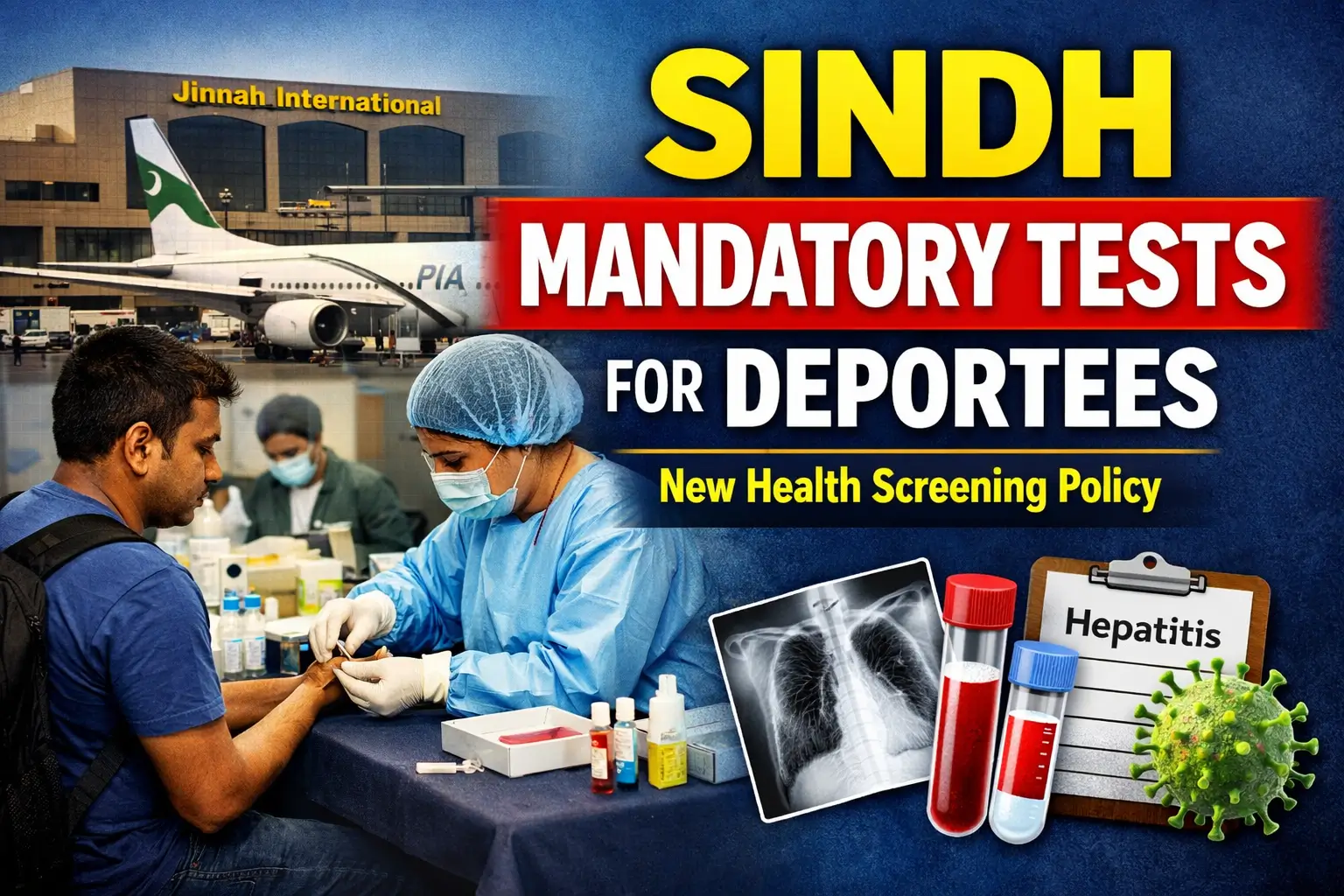
Sindh Mandatory Tests for Deportees 2026: New Health Policy Explained. The Sindh government has introduced mandatory medical tests for deportees returning from abroad under a new public health policy. The goal is simple: early disease detection and safer communities. This guide explains what the policy means, who it affects, and why it matters in 2026.

Sindh Introduces Mandatory Health Tests for Deportees
The Sindh Government has made health screening compulsory for all deportees entering the province.
The decision targets infectious diseases that often remain undetected for years.
Health officials say many deportees arrive without any prior medical checks.
With daily arrivals increasing, early screening is now seen as a necessary step.
Why the Policy Was Introduced
Several factors pushed authorities to act:
- Rising number of deportees returning each year
- Lack of medical screening before deportation
- Risk of silent disease transmission
- Pressure on public healthcare facilities
Sindh’s health department believes prevention at entry points is more effective than late treatment.
Entry Points Covered Under the New Policy
Mandatory testing is being carried out at major arrival locations across the province.
The primary focus is Jinnah International Airport, where most deportees arrive.

Daily Arrival Estimates
- 150–200 deportees arrive daily at Karachi airport
- Over 50,000 deportees entered Sindh in recent years
- Numbers are expected to increase in 2026
Health officials say these figures justify strict screening protocols.
Diseases Tested Under Sindh Mandatory Screening Policy
The Sindh mandatory tests for deportees focus on diseases that pose long-term public health risks.
Diseases Included
- HIV
- Tuberculosis (TB)
- Hepatitis B
- Hepatitis C
These illnesses can spread without symptoms, making early testing critical.
Table: Diseases and Screening Methods
| Disease | Screening Method | Purpose |
|---|---|---|
| HIV | Rapid blood test | Early diagnosis |
| Tuberculosis | X-ray screening | Detect active TB |
| Hepatitis B | Rapid test | Prevent spread |
| Hepatitis C | Rapid test | Early treatment |
On-the-Spot Testing and Immediate Support
Testing is conducted immediately upon arrival.
Results are available within a short time.
If a deportee tests positive:

- They are referred to treatment centers
- Medical counselling is provided
- Follow-up care is arranged
Officials say this system reduces delays and improves recovery outcomes.
Healthcare Preparedness and Staff Training
To ensure smooth implementation, the Sindh health department upgraded its facilities.
Key Preparedness Measures
- Rapid diagnostic kits
- X-ray machines at entry points
- Personal protective equipment
- Dedicated screening areas
Medical staff also received specialized training to handle screenings respectfully and professionally.
Confidentiality and Privacy Protection
Privacy is a core part of the policy.
Authorities confirmed that medical data will remain confidential.
Dr. Zafar Mehdi, communicable disease focal person at Karachi airport, stated that strict privacy protocols are enforced.
No medical information will be shared without legal authorization.

This approach helps reduce stigma and encourages cooperation.
Coordination With Federal and Airport Authorities
The Sindh government is working closely with:
- Federal Investigation Agency
- Airport authorities
- Immigration officials
Table: Agencies and Their Roles
| Agency | Responsibility |
|---|---|
| Sindh Health Department | Testing and treatment |
| FIA | Arrival coordination |
| Airport Authorities | Logistics and facilities |
This coordination ensures deportees are processed smoothly without delays.
Public Health Objectives Behind the Policy
The Sindh mandatory tests for deportees aim to achieve long-term health security.
Main Objectives
- Prevent disease transmission
- Strengthen health surveillance
- Reduce healthcare burden
- Support deportees with early treatment
Health experts say early detection saves both lives and public resources.

Impact on Deportees and Communities
For deportees, the policy provides:
- Free initial screening
- Early medical guidance
- Access to treatment programs
For communities, it reduces the risk of silent outbreaks and protects vulnerable populations.
FAQs About Sindh Mandatory Tests for Deportees
Are health tests mandatory for all deportees in Sindh?
Yes. All deportees entering Sindh must undergo medical screening.
Which diseases are tested under the policy?
HIV, tuberculosis, hepatitis B, and hepatitis C.
Where are the tests conducted?
At major entry points, mainly Jinnah International Airport, Karachi.

Is deportees’ medical data kept private?
Yes. Authorities follow strict confidentiality protocols.
Does the government provide treatment support?
Yes. Positive cases are referred to treatment and counselling services.
Conclusion
The Sindh mandatory tests for deportees policy marks a major step toward safer public health management in 2026. By combining early detection, privacy protection, and treatment support, the Sindh government aims to protect both returning citizens and local communities.